
(This is part 2 of a 3 part series on climate finance for India. Read part 1, 3 here.)
India needs a new type of financial institution that acts like a technologically advanced railway interchange (“capital interchange”). A capital interchange that will efficiently sort and redirect capital, structure transactions to ensure funds reach the right destinations, on time. It will use data driven approaches to align tracks and give signals to trains where it can move or slow down.
The interchange will attach concessional capital where necessary, couple commercial capital where practical. In the process, it will ensure that capital reaches both smaller, high-impact climate projects and the large-scale ones.
By doing that, the capital interchange will help investors across the capital spectrum – pension funds, endowments, insurance companies, development and commercial financial institutions, family offices, and foundations, increase the flow of capital into climate solutions.
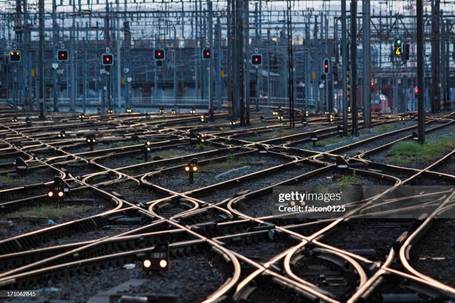
The capital interchange will achieve this in several ways.
Curating investment opportunities: Connecting small stations with big ones
The Capital Interchange will support investors across the returns and impact spectrum to drive capital in the climate space, particularly those opportunities that they would otherwise not consider directly.
Investors need clearly structured opportunities that match their risk appetite and return expectations. The capital interchange will leverage its expertise in specific climate sector supply chains to source, screen, conduct due diligence and structure transactions that satisfy specific goals related to financial returns and impact. It will also assist in deal monitoring and facilitating value-creation (in some cases) during the life of an investment. As a result, the investors will not need to develop evaluation criteria for each small project, nor will they need to evaluate each small project separately. The capital interchange will also work towards standardising contracts and deal structures to speed up deals closures.
To mitigate risk for investor partners, the Capital Interchange will always make mezzanine or pari-passu investments while also bringing in de-risking capital from other sources, where required. The Interchange will focus on transactions with a size range of USD 1- 60 million. It will fund the lower range of transaction sizes between USD 1-4 million directly from its own balance sheet as debt or mezzanine capital. For larger size of transactions, it will curate investment opportunities of USD 4-60 million for the partner investors while co-investing in the mezzanine or pari-passu tranches with the partner investors. The average exposure from the balance sheet is expected to be about USD 1.5 million for both senior and mezzanine exposures.
This would create scale and reduce efforts for investors, making such opportunities attractive.
Leveraging technology and research to create transparency: Sending prompt train status updates
A railway interchange uses a complex system of signals, switches and scheduling rules. Imagine entering a control room managing a railway network. In it, the operators use sophisticated dashboards to coordinate and route trains efficiently. Technology will play a similar role in improving climate finance. The Climate Interchange will use technology to convey information regarding risks and impact. Research and domain expertise based specific evaluation frameworks will show investment suitability and early warnings. This transparency will enable investors to take quick decisions with confidence. It will make it easier to find investments that align with their risk appetite and impact goals.
Capital interchange will draw on its domain expertise and deep industry connections to continually supply research and analytics to the partner investors to enable them to thoroughly assess investment opportunities which they would otherwise not have the time to build expertise on. The set of sectors and supply chains that are investable for different capital sources is expected to change rapidly depending upon regulatory changes and flow of funds. The Capital interchange with its local presence and deep connects with specific climate ecosystems, will continuously map this changing landscape. This practice will be expected to be financed by grants. Beyond enabling commercial institutional investors to invest, it will enable portfolio companies to build appropriate strategy. In addition, components of the research will be made publicly available as active contribution towards ecosystem building.
Blending capital: Replacing engines and adding coaches
Like a railway interchange matches engines and coaches to suit different terrains and routes, this capital interchange will match climate projects with varying types of capital. Hence, creating common ground for capital with different types of risk, return and impact expectations to work together.
For example, philanthropic capital can absorb early-stage risk and higher cost. This would make it easier for commercial investors to invest. This would in turn enable more such projects to be financed than what philanthropic capital alone could finance. Opportunities like climate-resilient agriculture, green buildings and nature-based solutions require concessional capital. It is often needed beyond the early stage. However, concessional capital alone is insufficient to meet the financing needs at scale.
Well-established assets like solar parks with multi-year contracts, offer stable cashflows that could attract pension funds and other long-term investors. However, there are critical financing gaps during the lifecycle of such well-established asset classes. While these projects require large amounts of capital over time, the initial phase requires smaller amounts, that a pension fund or even a bank may consider too little and too risky to be financed. Under these conditions, the best way to speed up the deployment of clean energy assets is to first attract small amounts of high-risk capital and then replace it with long-term capital as the project is deployed.
Hence, coordinating different capital sources into clean energy projects becomes essential to unlocking institutional investments. Similar situations would be seen in newer types of assets like Cooling-as-aservice or Pay-as-you-go energy projects.
Creating new risk capital: Building new purpose-built trains
The capital interchange must develop a new type of risk capital. A type of capital that doesn’t require exponential growth like venture capital equity. Nor should the capital require hard assets like a bank loan.
The capital interchange will need to offer financial products that fit the purpose. Better designed risk evaluation and product design will make this possible. By removing the expectation to scale rapidly and the need for mortgage collateral and by leveraging the strength of consistent cashflows tracked through a sophisticated risk tracking and signalling mechanism and leveraging credit protection from catalytic capital, the capital interchange could get commercial long-term investors fund a pool of similar projects directly at lower costs.
For example, the capital interchange could create a pool of assets that provide cooling as a service to hospitals and hotels. By doing this, the interchange could finance the adoption of the new technology, based on the long-term contracts between the hospitals/hotels and the cooling as a service provider. In such a structure, the cooling as service provider puts in a first loss, the capital interchange can put in mezzanine capital and the institutional investor can come in with senior long-term investments that gets paid back during the life of the contract.
There are several situations where new types of financial products are required. For example, there is a need for financing that encourages adoption of climate smart practices. A commercial investor cannot provide such a product. Here is one example of how it could work. A commercial lender may lend at commercial rates to an auto-component manufacturer. It can promise that the lender will give an interest rate rebate on a condition. The condition being that the manufacturer agrees to install a rooftop solar system. While the financing will be provided by the commercial lender, the interest rate rebate will be paid for by concessional capital sources.
(This is part 2 of a 3 part series on climate finance for India. Read part 1, 3 here.)
Discover more from Avishek Gupta
Subscribe to get the latest posts sent to your email.

 Avishek Gupta
One thought on “Needed: A climate finance interchange – a railway junction for capital”