Over the past decade or so, NBFCs have increasingly adopted a “growth at all costs” strategy, particularly in newer as well as in relatively riskier credit segments such as microfinance and unsecured MSME lending, EV financing, and rooftop solar financing. These are segments that are still evolving, have limited historical data, and inherently higher execution and credit risks.
A key driver of this behaviour is the funding constraint faced by early-stage and smaller NBFCs. Bank debt is typically unavailable to NBFCs operating at a small scale or with lower credit ratings. As a result, such NBFCs are forced to rely on a narrow set of high-cost NBFC or alternative lenders. This, in turn, pushes them toward credit segments that can absorb higher lending rates, reinforcing concentration in riskier asset classes.
To access lower-cost funding from banks or from development finance institutions, NBFCs generally need to reach a minimum scale of around INR 1,000–1,500 crore in assets or alternatively maintain very low leverage supported by substantial equity (often INR 500 crore or more). Credit rating upgrades, which are critical for funding access, are themselves contingent on achieving this scale or equity depth.
Consequently, NBFCs are incentivised to raise large amounts of equity early in their lifecycle to reach a “fundable” size quickly. However, higher equity raises come with heightened growth expectations. Equity investors require attractive IRRs, which translates into pressure on management to deploy capital rapidly. This creates a structural bias toward rapid balance sheet expansion. This has led to situations where NBFCs publicly articulate aggressive growth targets-such as scaling to INR 500 crore in assets within six months-backed primarily by equity capital.
History shows that such premature scaling has repeatedly resulted in asset quality stress and significant portfolio delinquencies. Look around. In newer credit models and while lending to weaker borrower segments, sustainable outcomes require cautious, measured growth, strong underwriting feedback loops, and time to learn from portfolio behaviour. The current funding environment, however, makes such measured growth difficult: early-stage debt is scarce and expensive, while equity funding implicitly demands speed.
This raises a fundamental question: how can prudent, phased growth be achieved in new and riskier lending segments when access to borrowings is constrained in the early stages and equity capital pushes NBFCs toward premature scale?
Recently proposed draft changes in ECB guidelines – particularly the removal of interest rate caps- could help address this mismatch. These changes may enable a greater inflow of foreign capital with “mezzanine-like” characteristics, sitting between pure equity and senior debt. Such capital can partially substitute for equity, reduce immediate growth pressure, and allow NBFCs to scale more gradually while building robust credit models.
Will the Indian financial services industry now learn to adopt a changed mindset to look at mezzanine as a replacement of equity and not for debt?
The traditional Indian financing hierarchy is still very binary:
Mezzanine capital sits uncomfortably in between and is treated as “expensive debt. But in reality, especially for early- to mid-stage NBFCs, mezzanine behaves far more like equity than debt:
It absorbs risk before senior lenders
It allows time for seasoning of portfolios
It reduces pressure for premature balance sheet expansion
It aligns better with measured growth in new credit models
Without recognising this, the industry will keep repeating the same boom–bust cycle driven by equity-fuelled hypergrowth.
So, what do you think? Will relaxing ECB regulations lead to more robust NBFCs and better inclusive finance?
As India’s climate tech ecosystem matures, a new kind of funding gap is becoming evident – lack of series B and later stage funding for climate technology companies outside the electric vehicles and solar sector. While equity investments are actively flowing into early-stage climate startups (accept this with a pinch of salt), there’s noticeably less traction for companies that have moved beyond proof of concept and are generating revenues, say above INR 150 Mn. This is particularly true for companies outside EV and solar.
This table below shows the data of funds raised by climate technology companies. Source: Indian Impact Investors Council’s Climate Bulletin. You will notice the number of deals drop dramatically between Series A and B.
Apr-Jun FY25
Jul-Sep FY25
Oct – Mar FY25
#
USD Mn
#
USD Mn
#
USD Mn
Seed
22
43
17
20
39
55
Series A
10
61
11
91
18
111
Series B
5
84
3
54
4
100
Later stages
4
72
3
162
7
1157
19
17
29
This situation presents a puzzle: many investors report that there simply aren’t enough mid-sized climate companies in the market do series B. At the same time, entrepreneurs and intermediaries highlight many professionally run businesses in areas like waste management, circular economy, energy efficiency, sustainable cooling, materials innovation, and climate-smart agriculture. In fact, multiple people operating in the space have confirmed that across all non-EV and non-solar sectors, there are likely over 80+ such enterprises with revenues above INR 150 Mn that are suitable for series A+/B equivalent equity funding.
So why aren’t they getting funded?
Variety fatigue:
In my view, one contributing factor is variety fatigue. Climate solutions outside of EV and solar are extremely diverse in terms of technology, business models, and end markets. For investors, particularly impact funds or those with tight sector theses, this diversity creates a steep diligence curve. Many funds are optimized for pattern recognition: they prefer to back models they understand and can replicate across 10–15 deals, as seen in sectors like microfinance, MSME lending, or EV fleet businesses. The cognitive and operational load of evaluating multiple different models often becomes a practical barrier.
This also leads to another odd problem. As the ticket sizes of series A have ballooned, early stage investments in non-EV sectors also seemed to have starting to suffer. For those wanting to raise between USD 1-5 Mn, there seems to be few interested investors. I hope to write about this in another post.
Need for financing beyond equity and debt:
Another critical issue is structural. I have discussed this in my previous article as well. The financing needs of climate technology companies fall into a grey area between equity and debt. They are asset heavy and their growth prospects might not yet justify high-valuation equity raises but they may lack proven/established assets for conventional debt. But they do have hard assets in most cases which makes debt type financing a better option that equity. As a result, both standard VC or bank financing unsuitable.
What these companies often need are mezzanine or structured capital solutions – instruments that combine features of both debt and equity. This could include revenue-based financing, convertible notes with performance-linked upside, or hybrid instruments. In some sectors, innovative models such as sale-and-leaseback, build-own-operate, or pay-as-you-go financing (popular in distributed solar and energy services) may offer more appropriate risk/return profiles for investors, while also supporting scale.
What is clear is that the financing ecosystem must evolve to match the heterogeneity and complexity of climate solutions. One possible approach is to develop investment cohorts – grouping companies not by sub-sector, but by business model type (e.g., recurring revenue models, service-based platforms, asset deployment businesses). This could reduce friction in due diligence and underwriting, while also allowing funds to specialize in operating model structures and financial structures rather than narrowly defined sectors.
Supporting the climate companies with the right instruments and frameworks would create a strong pipeline of scalable solutions, ready to contribute meaningfully to our climate goals.
I read a wonderful report on blended finance recently published by British International Investment and Boston Consulting Group (BCG). It is a rare report by an entity that has invested in quite a few blended finance transactions and so the report is quite practical. It is the type of a report that I can use for a teaching session. [Report]
One key takeaway from the report was: Development finance institutions (DFI) are not the pioneers – they are the scalers.
The report indicates that the role of the DFI is to bring in commercial capital after other investors have created several decades of track record of funding and de-risking a sector. Think microfinance, affordable housing – areas with a solid track record among impact investors and specialised investors but still considered risky by commercial players like international banks, insurance companies and pension funds, etc. DFIs step in to crowd in commercial capital once the model is proven.
But what about blended finance structures designed for newer areas like climate-smart agriculture or rooftop solar for MSMEs or debt for climate tech startups? These “pioneering” structures are too risky even for DFIs. They need patient, loss-tolerant, and concessional capital to get off the ground. Characteristics that philanthropic capital has. In fact, DFIs may also be able to support such structures but only after the concessional capital is ready to derisk the DFI, just like the DFI does for the commercial investor in case of the proven models.
The only problem – such loss-tolerant concessional capital is limited. Also, such sources of capital face the dilemma and the scrutiny of supporting quasi-commercial opportunities like these.
So here’s a humble suggestion to those planning to spend money on another report, study, conference, or panel discussion on blended finance: – Skip the event or study budget and fund a pioneering structure instead.
We’ve got enough reports and discussions. What we need now is capital backing real innovation.
You might wonder, what would a piddly amount of USD 50-120k, that you plan to spend on a report, could do for a blended finance structure. I can tell you that this amount can unlock 10-30 times additional funding. We did this back when I was in Caspian Debt, across atleast 3 different transaction types. We had 10+ years of track record with such structures and with close to zero losses. And yet, we couldn’t find capital to scale these structures because most investors considered these too risky or not enough “risk adjusted returns” even after 10 years of track record. It is time to change that. We will do fine with one less report on blended finance.
(This is part 3 of a 3 part series on climate finance for India. Read part 1, 2 here.)
While ideas are all good, high quality execution and ambition of capital is key. Climate finance is needed across sectors with varied business models and financing needs. Each need different evaluation process and operating model. E.g.: Financing a small factory to adopt rooftop solar power requires a distinct approach and loan product. It is different from financing rainwater harvesting projects for buildings. Financing a startup that manufactures energy efficient fans require an alternate evaluation method from traditional corporate loans. A retail financial institution that provides loans to buy solar powered fruit driers needs to be evaluated and funded in a completely different manner. Dealing with all the above, at the beginning, is complex.
Choose the initial set of customer segment and product offerings:
The capital interchange should initially focus on one or two customer segments and one or two product types till it reaches a reasonable asset size.
Some of the potential customer segments to start with are:
Wholesale NBFC lending for building climate smart portfolio, followed by securitisation of the pools of retail loans created.
Financing for corporates and their supply chain to adopt climate smart technologies -For example sub-segments within industrial decarbonisation (energy efficiency, water, pollution control, waste management) or industrial and domestic cooling/ heating could be studied to identify a good place to start.
Climate technology companies at the early commercialisation phase requiring capex or working capital support or support for financing innovations (eg: PayGo, Heating/cooling as a service, etc) to accelerate adoption.
An ideal mix would be to identify one technology and supply chain where there is policy or business pressure to achieve quick scale. Designing financing structures in that area and replicating that process can help in building assets reasonably quickly.
Build prototypes of the intelligence infrastructure:
The next step is to find the metrics and reports that would make it easier to make quick decisions. E.g.: Early warning systems and risk and impact evaluation frameworks are key components. This will serve as the signals and switches that lead to faster decision making. Building low-cost prototypes of these frameworks in the first 1-2 years using spreadsheets and cheap software will help future technology development.
The intelligence infrastructure will be the foundation of the transparent systems that the capital interchange will build to attract investors. While initially the capital interchange will demonstrate skin in the game with its own balance sheet, over time, the intelligence infrastructure should enable greater leverage of the balance sheet.
Bring together the initial set of investors:
It is important to find the first set of aligned investors to invest in the balance sheet of the entity and to make commitments to invest directly intro transactions/deals curated by the interchange. It would be ideal to have an initial consortium of investor partners with representation across the capital spectrum. It would be necessary to have at least one development focussed and one philanthropic investor as investor partners to start off with. It would be useful to bring in at least one commercial investor from amongst pension funds, endowments, financial institutions or insurance companies. The expectation from each investor category is to commit to making direct investments into projects, structured transactions and companies.
The entity will also do well to fast track the process of being eligible of subsidies from the likes of SIDBI or other sources. Access to guarantee facilities at sub-commercial guarantee fee rates would also add significant value.
Create a dual for profit and non-profit structure:
Given the goal of blending both commercial and concessional capital, a dual structure is needed. One would be a licensed for-profit investment arm to focus on capital that seeks financial returns at different levels. The other would be a non-profit arm that would focus on capital for ecosystem and product development, as well as capacity.
The non-profit arm will focus on delivering ecosystem value by conducting sector research and impact evaluation. By sharing anonymized data collected on impact and returns of the transactions, it will seek to establish benchmarks for future investments. It will also carry out work related to project development for new type of deals structures.
The licensed for- profit arm is expected to be an NBFC. The NBFC enables the capital interchange to demonstrate skin in the game and enables it to curate/warehouse pools of assets that will finally move to the balance sheet of long-term investors. Where the asset size is not meaningfully large, fund vehicles may be promoted by the NBFC through a subsidiary.
It must be noted that the capital interchange is NOT an NBFC. It is a risk and impact data intelligence company with the execution skills of an asset management firm. It is an institution that uses legal structures like the non-profit arm, an NBFC and/or funds to demonstrate skin in the game by using the best fit channel to drive capital towards climate solutions. The growth or success of the firm is not to be decided based on the size of the assets that it is on their balance sheet, it should be based on how many times the balance sheet has been leveraged to mobilize a capital for the climate projects.
A climate capital interchange for a resilient economy
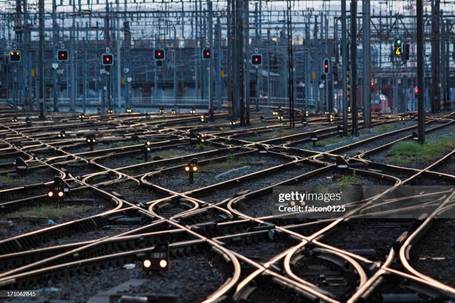
Like a well-managed railway interchange converts disconnected routes into a well-functioning transportation network, a capital interchange can ensure that no climate solution is left stranded.
Investors must act now, because climate finance isn’t just about numbers quoted. The billions committed can’t remain empty promises made at conferences held in snowy resort towns. They must translate into real impact, on the ground, today.
(This is part 3 of a 3 part series on climate finance for India. Read part 1, 2 here.)
(This is part 2 of a 3 part series on climate finance for India. Read part 1, 3 here.)
India needs a new type of financial institution that acts like a technologically advanced railway interchange (“capital interchange”). A capital interchange that will efficiently sort and redirect capital, structure transactions to ensure funds reach the right destinations, on time. It will use data driven approaches to align tracks and give signals to trains where it can move or slow down.
The interchange will attach concessional capital where necessary, couple commercial capital where practical. In the process, it will ensure that capital reaches both smaller, high-impact climate projects and the large-scale ones.
By doing that, the capital interchange will help investors across the capital spectrum – pension funds, endowments, insurance companies, development and commercial financial institutions, family offices, and foundations, increase the flow of capital into climate solutions.
The capital interchange will achieve this in several ways.
Curating investment opportunities: Connecting small stations with big ones
The Capital Interchange will support investors across the returns and impact spectrum to drive capital in the climate space, particularly those opportunities that they would otherwise not consider directly.
Investors need clearly structured opportunities that match their risk appetite and return expectations. The capital interchange will leverage its expertise in specific climate sector supply chains to source, screen, conduct due diligence and structure transactions that satisfy specific goals related to financial returns and impact. It will also assist in deal monitoring and facilitating value-creation (in some cases) during the life of an investment. As a result, the investors will not need to develop evaluation criteria for each small project, nor will they need to evaluate each small project separately. The capital interchange will also work towards standardising contracts and deal structures to speed up deals closures.
To mitigate risk for investor partners, the Capital Interchange will always make mezzanine or pari-passu investments while also bringing in de-risking capital from other sources, where required. The Interchange will focus on transactions with a size range of USD 1- 60 million. It will fund the lower range of transaction sizes between USD 1-4 million directly from its own balance sheet as debt or mezzanine capital. For larger size of transactions, it will curate investment opportunities of USD 4-60 million for the partner investors while co-investing in the mezzanine or pari-passu tranches with the partner investors. The average exposure from the balance sheet is expected to be about USD 1.5 million for both senior and mezzanine exposures.
This would create scale and reduce efforts for investors, making such opportunities attractive.
Leveraging technology and research to create transparency: Sending prompt train status updates
A railway interchange uses a complex system of signals, switches and scheduling rules. Imagine entering a control room managing a railway network. In it, the operators use sophisticated dashboards to coordinate and route trains efficiently. Technology will play a similar role in improving climate finance. The Climate Interchange will use technology to convey information regarding risks and impact. Research and domain expertise based specific evaluation frameworks will show investment suitability and early warnings. This transparency will enable investors to take quick decisions with confidence. It will make it easier to find investments that align with their risk appetite and impact goals.
Capital interchange will draw on its domain expertise and deep industry connections to continually supply research and analytics to the partner investors to enable them to thoroughly assess investment opportunities which they would otherwise not have the time to build expertise on. The set of sectors and supply chains that are investable for different capital sources is expected to change rapidly depending upon regulatory changes and flow of funds. The Capital interchange with its local presence and deep connects with specific climate ecosystems, will continuously map this changing landscape. This practice will be expected to be financed by grants. Beyond enabling commercial institutional investors to invest, it will enable portfolio companies to build appropriate strategy. In addition, components of the research will be made publicly available as active contribution towards ecosystem building.
Blending capital: Replacing engines and adding coaches
Like a railway interchange matches engines and coaches to suit different terrains and routes, this capital interchange will match climate projects with varying types of capital. Hence, creating common ground for capital with different types of risk, return and impact expectations to work together.
For example, philanthropic capital can absorb early-stage risk and higher cost. This would make it easier for commercial investors to invest. This would in turn enable more such projects to be financed than what philanthropic capital alone could finance. Opportunities like climate-resilient agriculture, green buildings and nature-based solutions require concessional capital. It is often needed beyond the early stage. However, concessional capital alone is insufficient to meet the financing needs at scale.
Well-established assets like solar parks with multi-year contracts, offer stable cashflows that could attract pension funds and other long-term investors. However, there are critical financing gaps during the lifecycle of such well-established asset classes. While these projects require large amounts of capital over time, the initial phase requires smaller amounts, that a pension fund or even a bank may consider too little and too risky to be financed. Under these conditions, the best way to speed up the deployment of clean energy assets is to first attract small amounts of high-risk capital and then replace it with long-term capital as the project is deployed.
Hence, coordinating different capital sources into clean energy projects becomes essential to unlocking institutional investments. Similar situations would be seen in newer types of assets like Cooling-as-aservice or Pay-as-you-go energy projects.
Creating new risk capital: Building new purpose-built trains
The capital interchange must develop a new type of risk capital. A type of capital that doesn’t require exponential growth like venture capital equity. Nor should the capital require hard assets like a bank loan.
The capital interchange will need to offer financial products that fit the purpose. Better designed risk evaluation and product design will make this possible. By removing the expectation to scale rapidly and the need for mortgage collateral and by leveraging the strength of consistent cashflows tracked through a sophisticated risk tracking and signalling mechanism and leveraging credit protection from catalytic capital, the capital interchange could get commercial long-term investors fund a pool of similar projects directly at lower costs.
For example, the capital interchange could create a pool of assets that provide cooling as a service to hospitals and hotels. By doing this, the interchange could finance the adoption of the new technology, based on the long-term contracts between the hospitals/hotels and the cooling as a service provider. In such a structure, the cooling as service provider puts in a first loss, the capital interchange can put in mezzanine capital and the institutional investor can come in with senior long-term investments that gets paid back during the life of the contract.
There are several situations where new types of financial products are required. For example, there is a need for financing that encourages adoption of climate smart practices. A commercial investor cannot provide such a product. Here is one example of how it could work. A commercial lender may lend at commercial rates to an auto-component manufacturer. It can promise that the lender will give an interest rate rebate on a condition. The condition being that the manufacturer agrees to install a rooftop solar system. While the financing will be provided by the commercial lender, the interest rate rebate will be paid for by concessional capital sources.
(This is part 2 of a 3 part series on climate finance for India. Read part 1, 3 here.)
(This is part 1 of a 3 part series on climate finance for India. Read part 2, 3 here.)
Climate change poses a significant threat to India’s economic growth and development. It is widely accepted that India needs to invest trillions of dollars to prevent severe economic losses due to climate change. Luckily, several investors have committed billions to invest for climate finance in India.
And yet, the actual amount of capital invested to date is less than the total capital needed. Investors say there are few investable opportunities. But climate projects and organisations, solving climate issues, claim that finance is not available.
Climate finance is like a poorly managed railway network
The climate finance situation in India is like a poorly managed railway system. Trains arrive but can’t reach their platforms. High-speed trains connecting major cities are prioritised over regional ones that carry far more passengers. Congestion slows everything down, delaying trains and leaving passengers frustrated.
Why are the climate finance trains delayed?
Currently, climate finance in India, is focussed on large scale solar or wind parks. These types of projects have many years of investment history. Over time, investors have developed well-defined evaluation criteria. The perceived risk is low, and the investors can invest larger amounts per transaction. Electric vehicles and vehicles financing has recently been able to raise significant capital, largely due to policy tailwinds.
However, smaller climate projects, modern technologies and business models, struggle to secure financing. They have limited operating history and no standard evaluation criteria. This makes them harder and more expensive to assess compared to larger projects. Investing in these projects requires risk appetite and patience.
Lack of investor domain expertise and inability to invest time leads to focus on larger investments:
Investing in any new area requires a commitment of time and people to build expertise on the relevant sectors and develop sources of deal-flow. Large investors, who deploy billions of dollars with relatively small teams, have to justify such commitments of time and people, especially if it is for sectors or opportunities that do not have a history of raising commercial capital. Often such efforts are found to be wasteful.
Difficult to find common ground for capital sources with different risk- return-impact expectations:
Philanthropic concessional capital has risk appetite and patience for early and sub-scale projects and technologies, but such form of capital is limited. Commercial investors are not constrained by capital, but they do not have the risk appetite. They may also expect unrealistic financial returns. Concessional capital can promise to absorb the risk and make these opportunities safer to invest for commercial investors. Unfortunately, they do not find common ground to work with each other.
Traditional categorisation of investor types does not suit climate finance:
Another problem is that investors are normally split into two distinct categories- Venture capital investors providing equity capital and banks providing debt capital. When venture capital investors invest, they expect companies to grow exponentially. When banks finance, they expect hard assets as collateral and years of track record. Significant majority of climate opportunities are not suited for either type of financing. They need something in between. Traditional categorisation of investors leads to climate projects not getting funded.
In summary, the current financial system is like an inefficiently run railway system that prioritizes highspeed express trains and neglects regional routes. It leaves out impactful projects that affects most of the people.
(This is part 1 of a 3 part series on climate finance for India. Read part 2, 3 here.)




 Avishek Gupta