
Every few weeks, a new impact champion is born. Sometimes it is an individual. Sometimes it is an organisation. Either way, they have suddenly discovered that they have always been deeply committed to impact.
Only a few months ago they were focused on sneakily extracting a little more margin from customers, distributors, employees and suppliers. Today they are discussing systems change, livelihoods and community ownership with remarkable confidence.
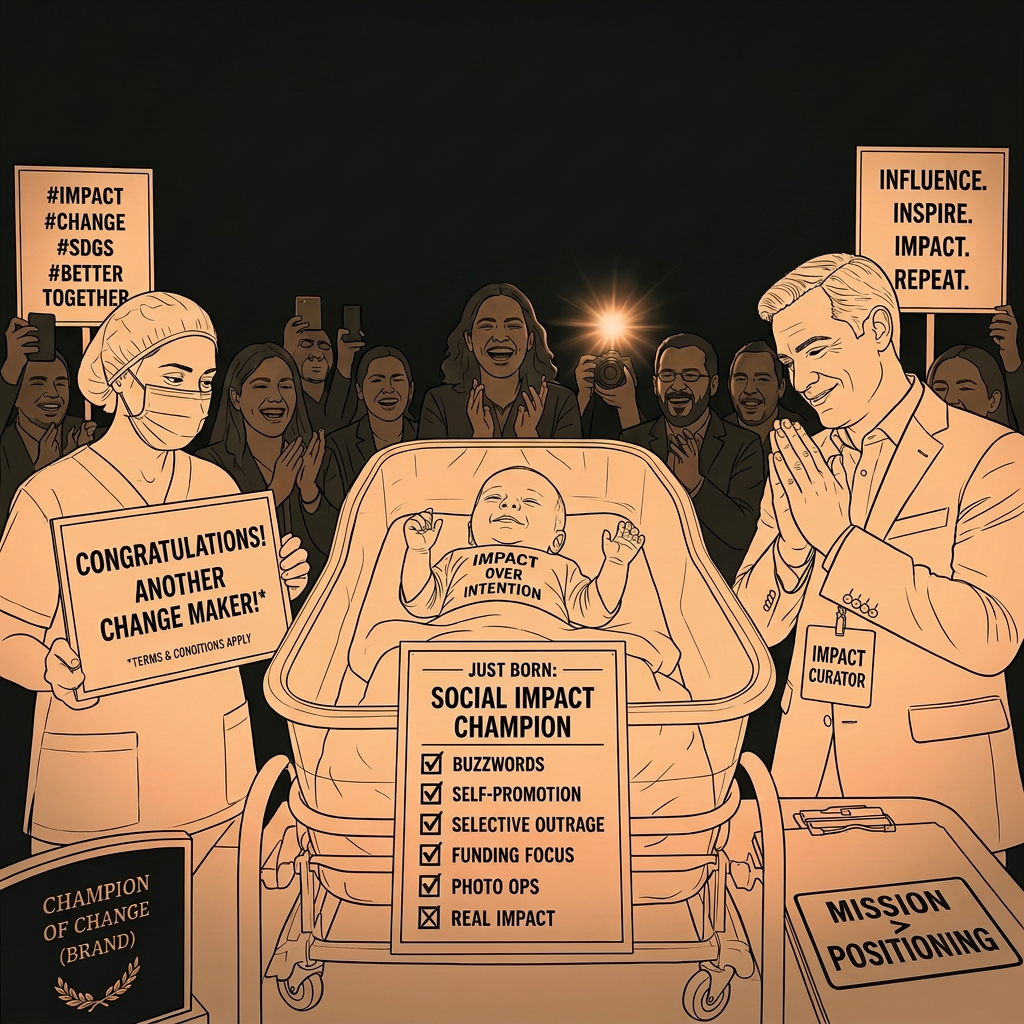
Usually, there is a reason for the change of heart. A new role. A new fund. An investor question. A lost job. A board meeting that ended with, “We should probably have an impact strategy.”
Then comes the honeymoon.
Every conversation reveals a “new” idea. Every pilot is “innovative.” They enthusiastically rediscover ideas that practitioners explored and abandoned, a decade ago. They champion “breakthroughs” that veterans recognise as familiar dead ends. The media writes glowing profiles. LinkedIn applauds. The cycle repeats.
The internal dialogue within the individuals or organisations is rarely shared publicly. It is often a mix of: “This sector is unbelievably inefficient.” or “I am doing a favour to the poor and downtrodden.” or “I didn’t do an MBA/start a company to spend my Tuesdays discussing goat-rearing collectives.”
It is equal parts amusing and encouraging. Amusing because the impact sector seems destined to relearn the same lessons every few years.
None of this is necessarily a bad thing. Every sector needs fresh energy and fresh capital. And occasionally, someone arrives with genuinely useful questions because they don’t yet know what is supposed to be impossible.
But the people or organisations worth watching are not the ones who become experts in three months and leave the “sector” in two years after a “sabbatical” or after a “strategy refresh” or better still after a tactical decsion “we will do whatever we were doing, just get a PR person and a good photographer to make us look “impact” – our investor will pay for it.”
The ones to watch out for are the ones who, after a few years, have become noticeably less certain and more invested in the impact sector. Because somewhere between the first field visit and the fiftieth, they discover that impact work has an annoying habit of refusing to fit neatly into PowerPoint slides. That challenge becomes more interesting than anything else in their lives.
That’s usually when the real work begins.
Discover more from Avishek Gupta
Subscribe to get the latest posts sent to your email.


